BODIES, SYSTEMS & BEHAVIOUR
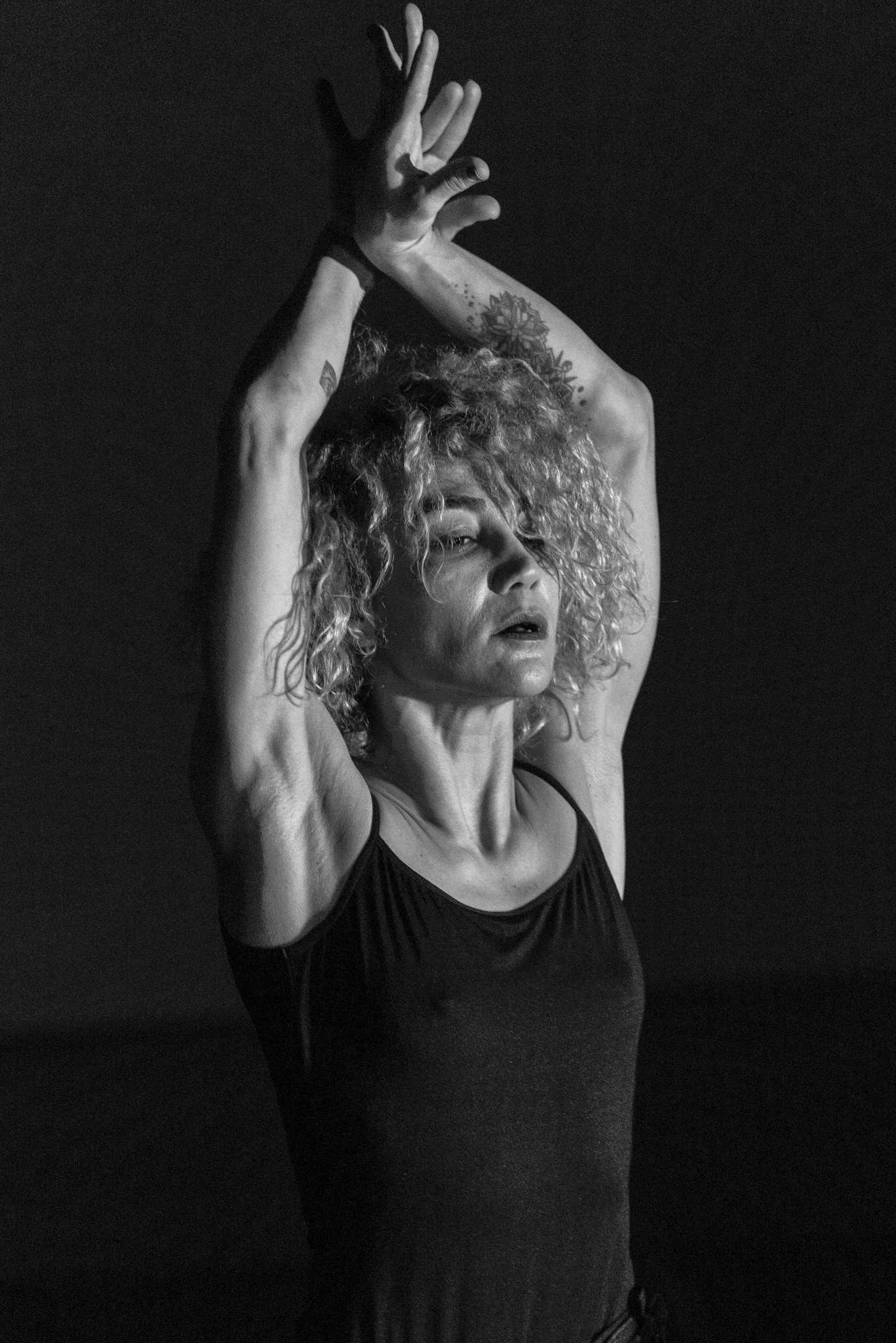
This research line investigates how bodies are organised, perceived and evaluated within social, spatial and participatory systems. I examine how architecture, surveillance, audience attention, collective behaviour and visible identity influence whether a body is recognised, ignored, feared, desired, assisted or treated as spectacle.
The body enters structures that distribute visibility, authority, risk and care. Through public-space interventions and participatory performance systems, I investigate how behaviour is produced relationally: between performer and observer, individual and group, physical action and social interpretation.
These questions were developed directly through the funded research project Stoic, Deadpan and Falling and subsequently extended through Occasionally Colliding, Collidings, Eau de Colonisation, Belly Dancer and SUBJ: Medea, where audience attention and response become active forces within the choreography.
FUNDED RESEARCH project
STOIC, DEADPAN AND FALLING — 2022
Funded by Fonds Darstellende Künste through the TAKE HEART programme.
ABOUT THE RESEARCH
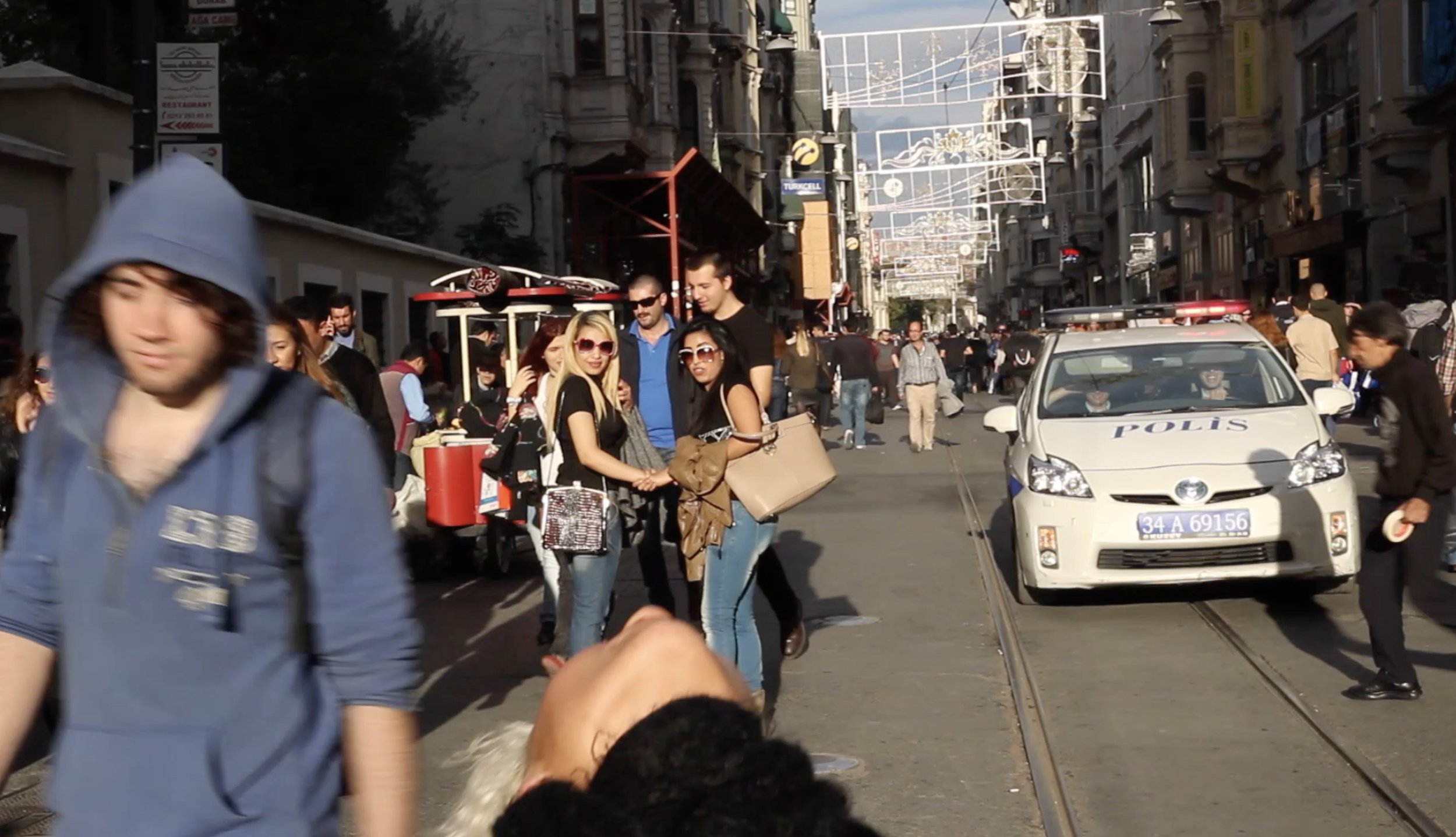
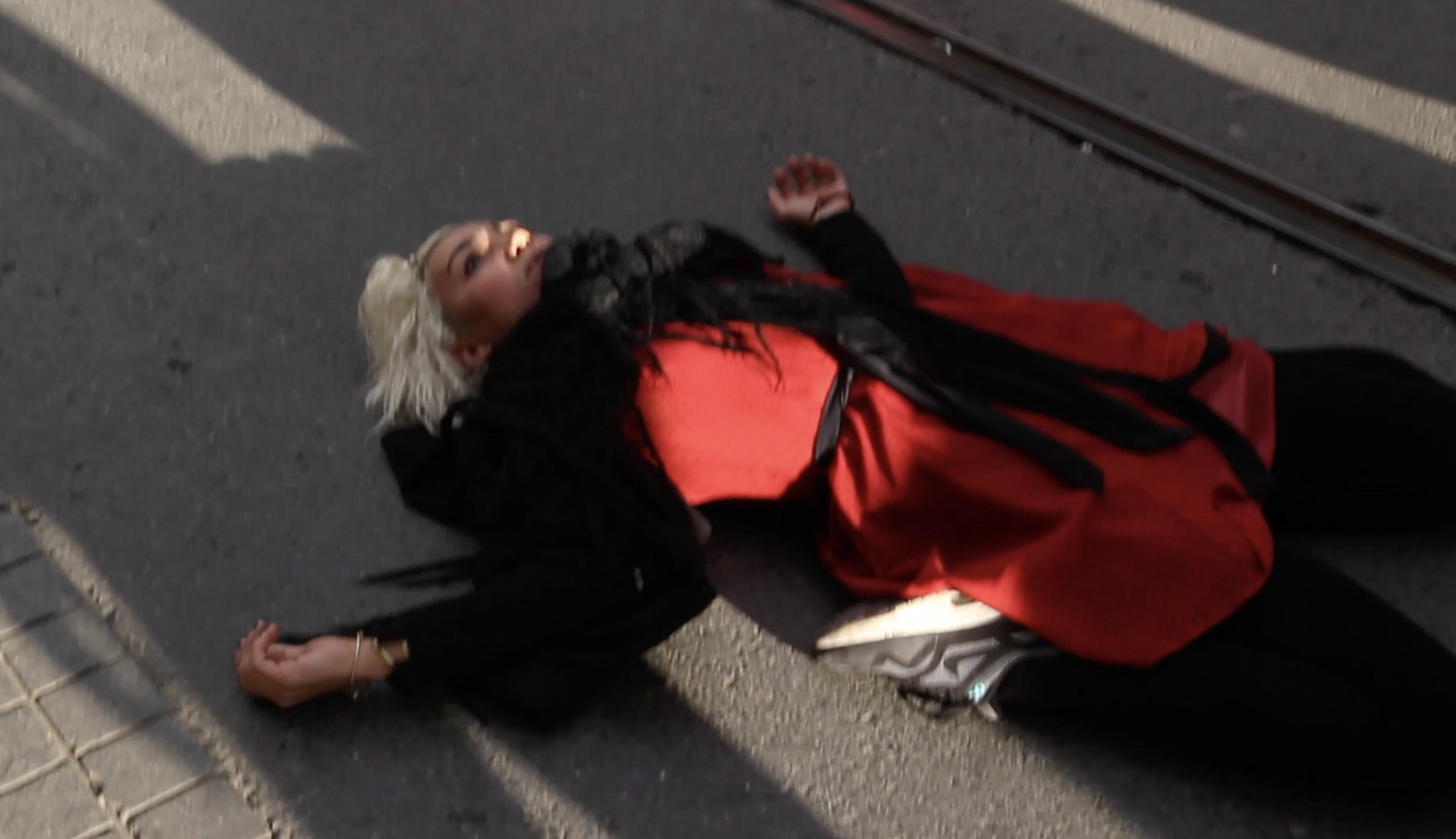
Stoic, Deadpan and Falling investigated falling as a physical, social and political event situated between comedy and tragedy. Through repeated public-space interventions, I examined how passers-by responded to a silent falling body and how those responses were shaped by architecture, crowd behaviour, surveillance, visible identity, fear, prejudice and care.
The research treated public space as an active choreographic force. The same physical action could be read as comic, vulnerable, threatening, staged or illegible depending on its location, duration, movement quality and the perceived identity of the performer. Audience reaction therefore became part of the choreography, continually altering the performer’s choices, physical risk and agency.
The project also developed a movement practice based on falling, restraint, stillness and deadpan expression. I worked to dismantle habitual control and investigate the unstable boundary between performed action and involuntary response.
KEY FINDINGS
Public behaviour is highly self-regulated and shaped by surveillance, social codes and fear of judgement.
The same physical action can be perceived as vulnerable, comic, threatening or staged depending on its location and the visible identity of the performer.
Fear frequently precedes care; assistance may be delayed, delegated or avoided.
Audience reactions spread collectively, altering both individual behaviour and the performer’s physical choices.
Public space is an active choreographic force that distributes visibility, risk and agency.
CONNECTED WORKS
The questions developed through Stoic, Deadpan and Falling continue across works in which audience behaviour no longer remains outside the performance but enters the choreographic system itself. Attention, proximity, hesitation, choice, refusal and collective response affect how movement is produced, how performers adapt, and how visibility, risk and agency are distributed in real time.
OCCASIONALLY COLLIDING
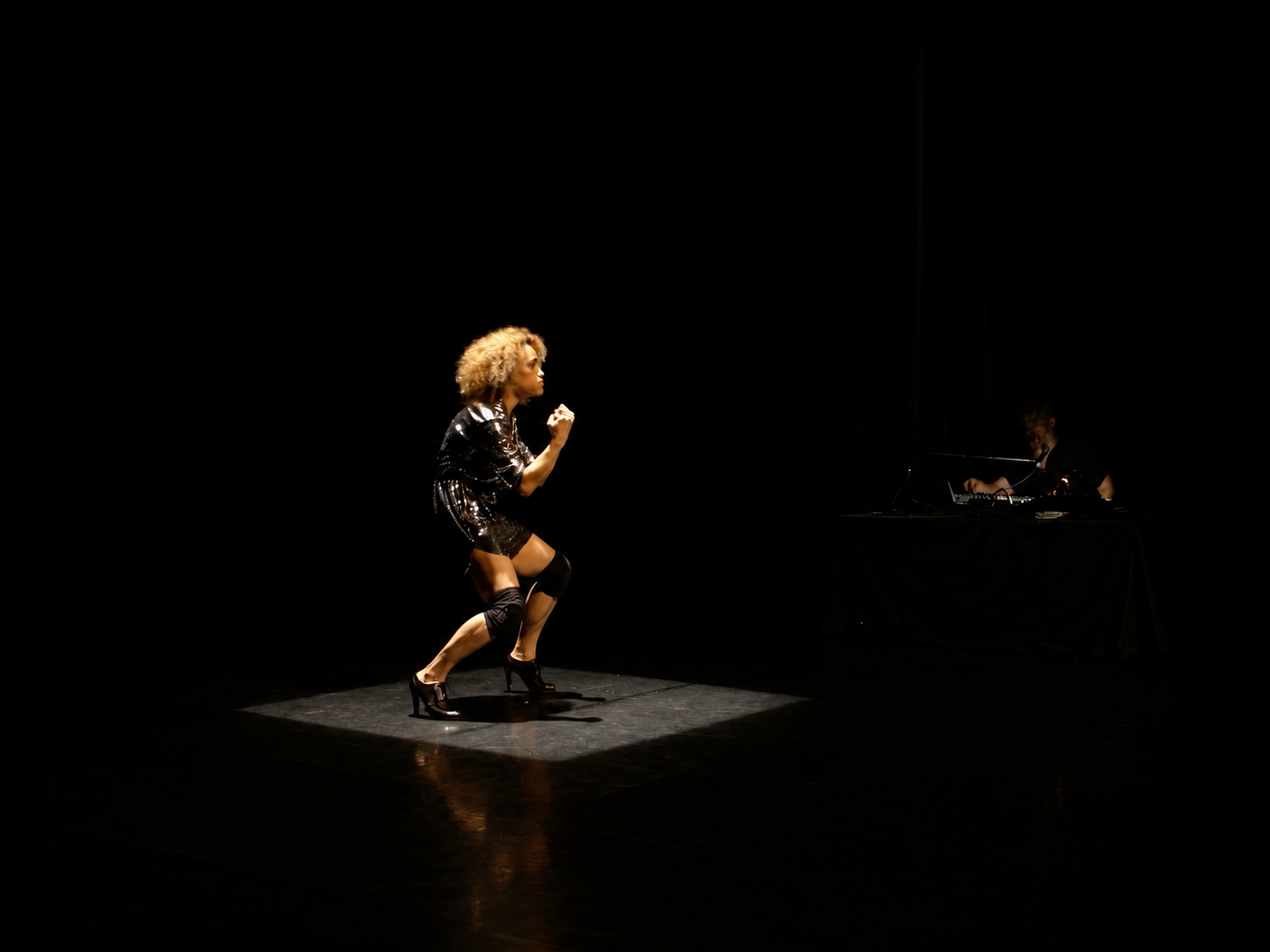
Movement, live sound and audience response form an unstable system in which choreography emerges through interruption, proximity and negotiation rather than through a fully predetermined sequence.
COLLIDINGS
Encounters between bodies, sound, space and spectators examine how individual actions become collective patterns, and how control continually shifts between performer, audience and environment.
EAU DE COLONISATION
Participatory exchange turns desire, memory, ownership and colonial inheritance into live social actions. Audience choices reveal how value, complicity and power are produced through apparently simple acts of selection and exchange.
SUBJ: MEDEA
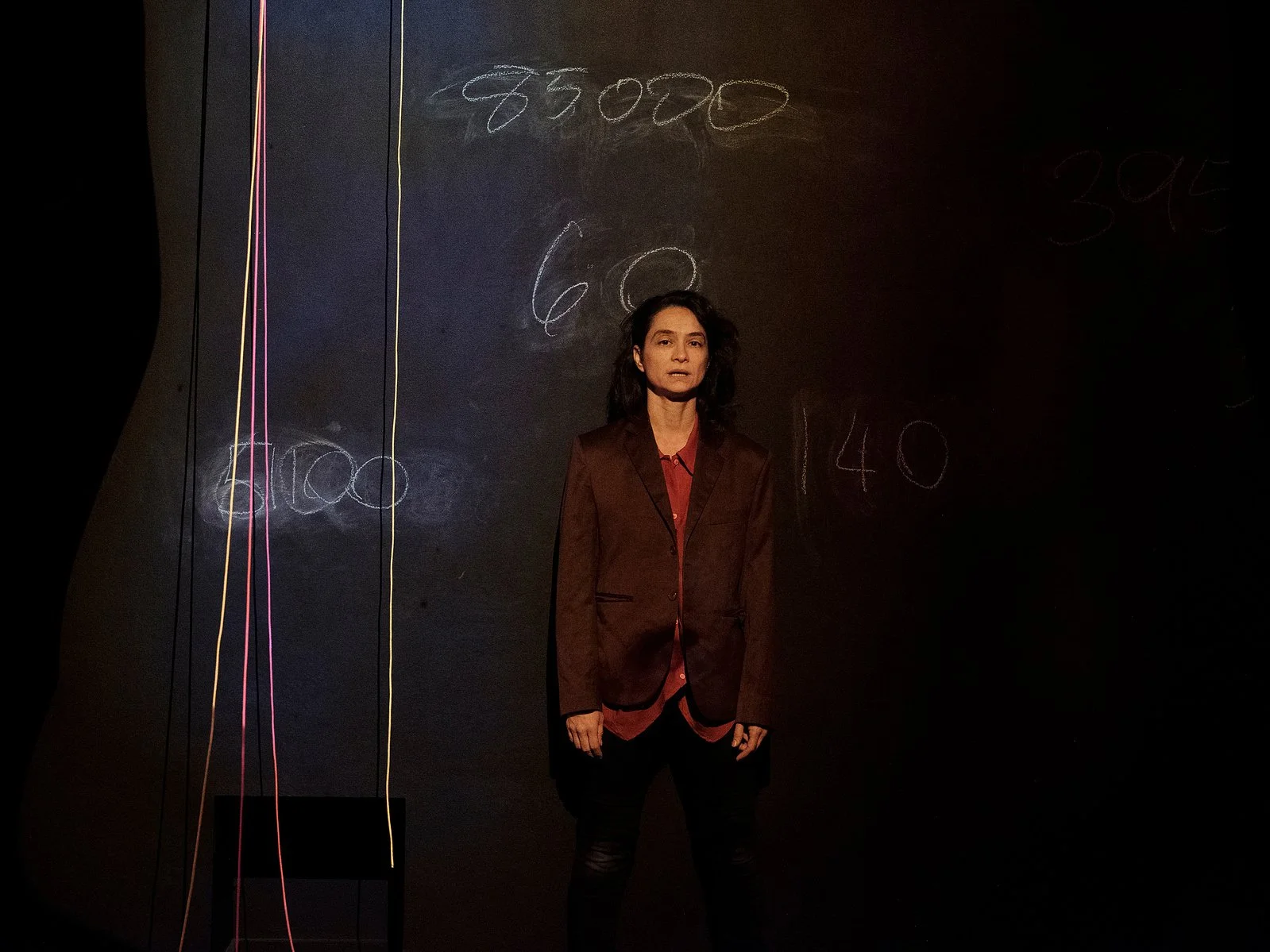
Voice, spatial positioning and the audience gaze place the performer’s body under judgement. The work investigates how a body negotiates visibility, violence, legibility and refusal within a shared performance situation.