MEMORY, MYTH AND POLITICAL HISTORY
I am interested in the point where private memory, myth and political history become inseparable.
This research treats the body as a contested archive: a place where inherited stories, erased histories, migration, music and violence survive as gesture, rhythm, voice and silence. I approach myth as a living political structure that continues to organise gender, nation, belonging, heroism and exclusion.
Working from histories of migration, displacement and cultural inheritance, text, live sound and image to bring personal and collective memory into conflict. Archives are translated into unstable physical scores; familiar stories are fractured, repeated and reassembled from the position of bodies they have silenced. Choreography becomes a method of remembering against erasure and of producing counter-histories through the body.
FUNDED RESEARCH PROJECTS
VOICE OF MEDUSA — RESEARCH FOR A DRAMATURGIC TALE OF MUSIC IN PERFORMANCE 2021
Funded through DIS-TANZEN Solo
ABOUT THE RESEARCH
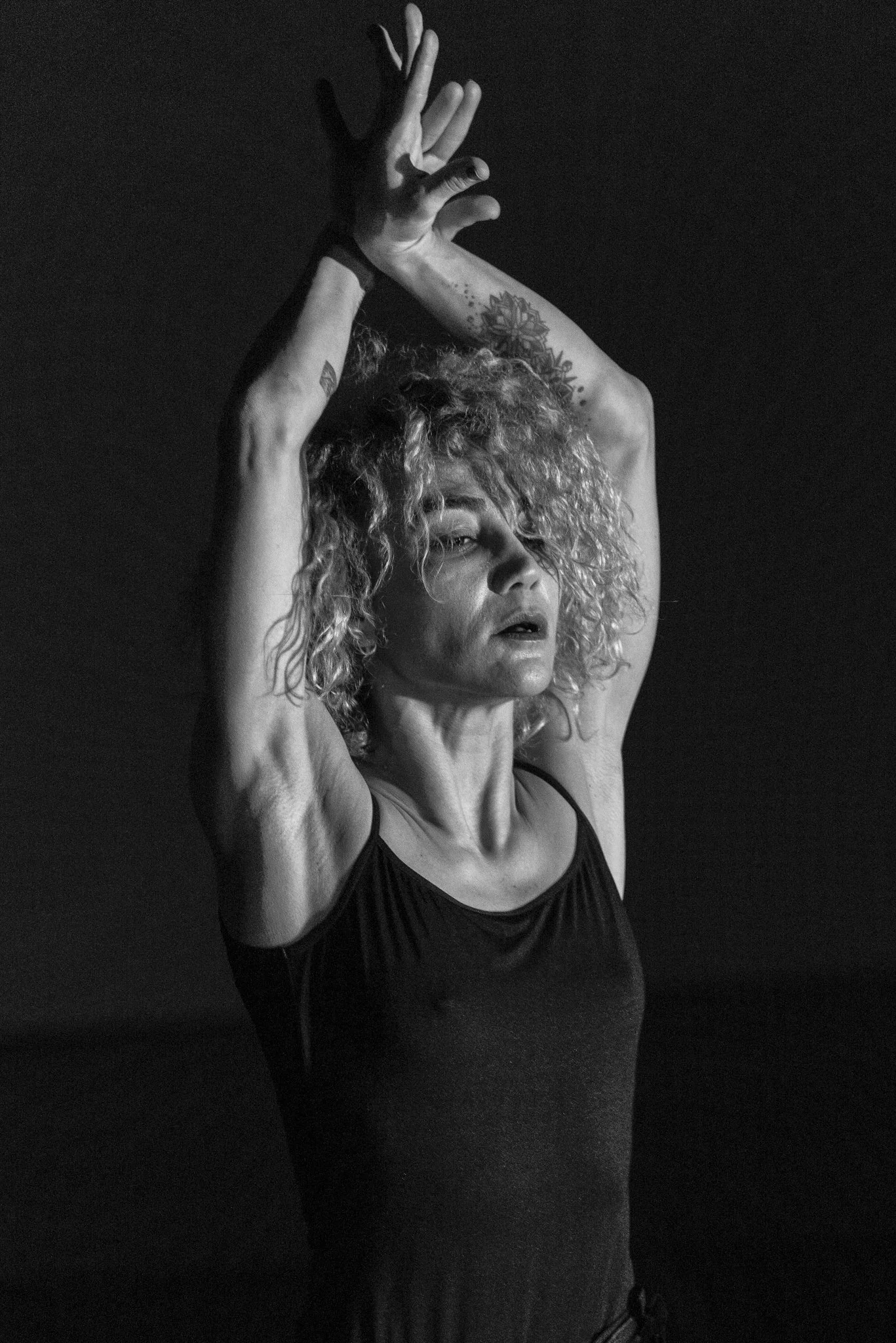
Voice of Medusa re-examines Medusa as a victim of sexual violence. In the myth, Poseidon rapes her inside Athena’s temple, yet Medusa, not the perpetrator, is punished, transformed and socially erased. The research approaches this story as an expression of a continuing patriarchal logic in which violence against women is displaced onto women’s bodies, voices and identities.
The project connects Medusa’s story to femicides in Türkiye, the normalisation of violence against women, and Türkiye’s withdrawal from the Istanbul Convention in 2021. Rooted partly in my own lived experience of growing up within a society where women’s bodies and sexuality are continually controlled, the research reclaims Medusa as a figure of resistance and acts as a counter-narrative for women silenced or erased by patriarchal, cultural, religious and state structures.
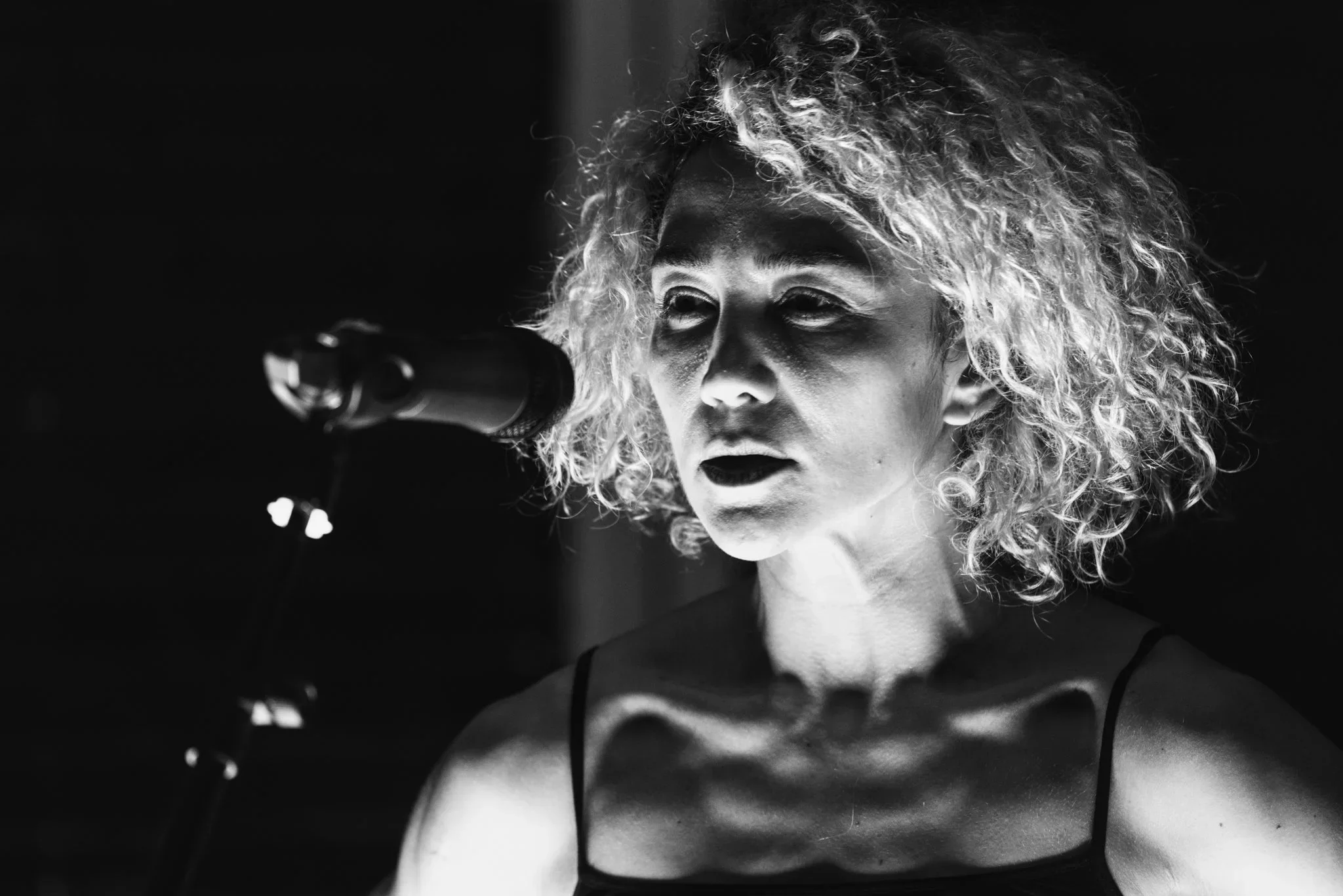
Conceived as a sonic–movement research process, Voice of Medusa investigates voice as an embodied, political and affective force. Sound, breath, vibration and movement carry histories of trauma, rage, resilience and transformation. The project builds upon the live vocal and sonic research developed with Hüseyin Evirgen aka Magna Pia in Occasionally Colliding, where throat singing, drone-based improvisation, electronics and vocal effects allowed movement to emerge directly from sound rather than accompany it.
The research asks how a voice; fragmented, amplified, distorted or raw, can reclaim what has historically been silenced, transforming Medusa’s imposed silence into an act of sonic resistance.
KEY FINDINGS
Myth is part of contemporary politics. The silencing and stigmatisation of Medusa continue through victim-blaming, femicides and the institutional normalisation of violence against women.
Voice can function as embodied political material. Breath, vibration, fragmentation, amplification and distortion can carry trauma, rage, resilience and transformation without requiring a linear narrative.
Movement and sound can be produced in reciprocity, each affecting the other through sonic impulses, frequency, rhythm, vibration and physical action.
Live sound can operate as a dramaturgical force, constructing meaning through the energetic exchange between voice, movement, performer, audience and space.
Reclaiming Medusa as a victim and a figure of resistance creates a counter-narrative capable of transforming imposed silence into sonic and corporeal resistance.
TURKISH WAVES OF MIGRATION AND THEIR RELATION TO ART AND CULTURE — 2019
Funded by Fonds Darstellende Künste.
ABOUT THE PROJECT
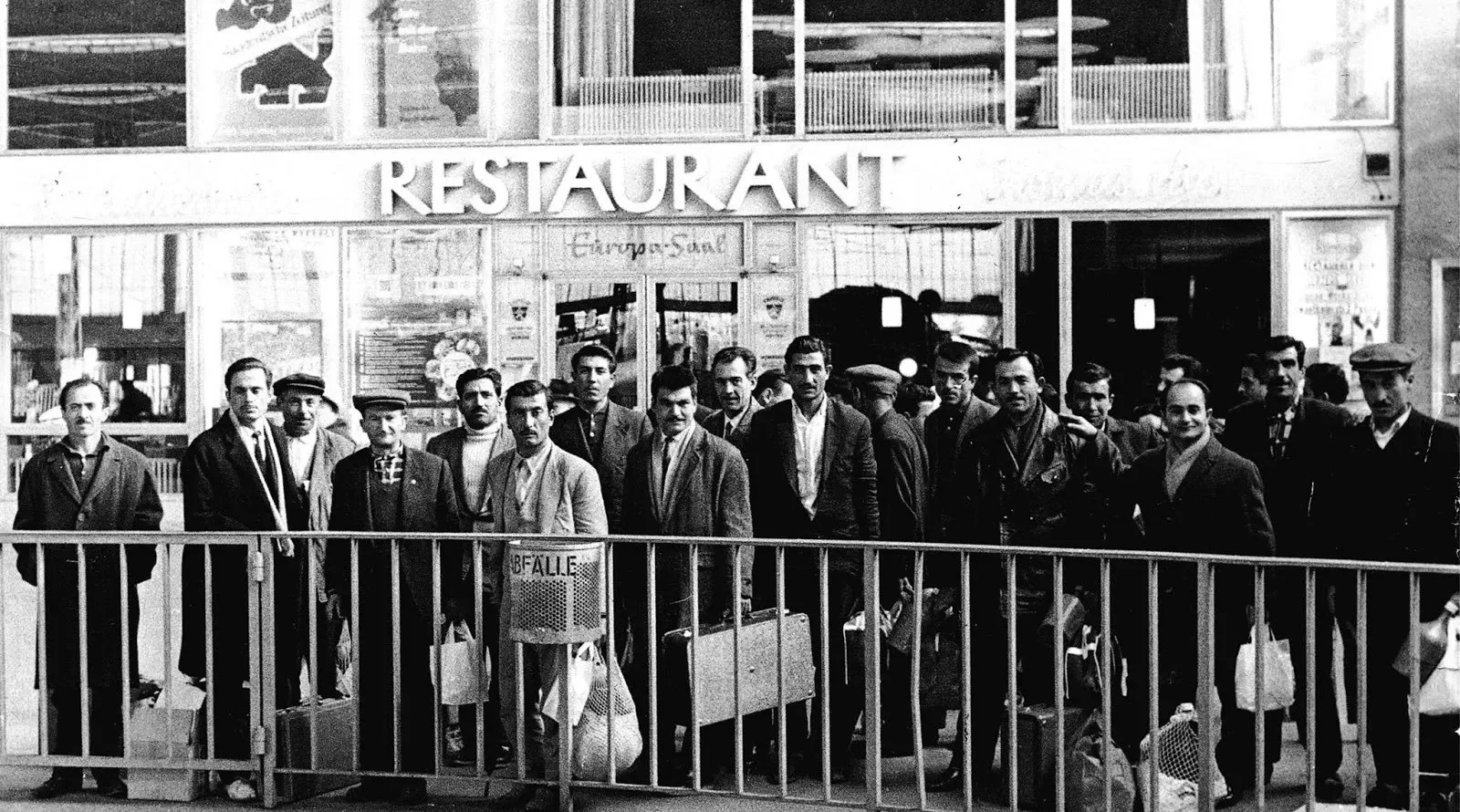
Turkish Waves of Migration and Their Relation to Art and Culture investigates different waves of migration from Turkey to Germany, from the Gastarbeiter movement of the 1960s to the post-Gezi migration shaped by political repression, censorship and intellectual exile. As a member of the post-Gezi generation, I began the research from a desire to understand how earlier migrants were received, how they survived their initial arrival and what role culture and artistic expression played in that process.
The research asks how communities communicated in the absence of a shared language and whether bodily practices, music and artistic production functioned as tools for survival, connection and identity formation. It traces how temporary labour migration developed into permanent settlement and how hybrid cultural forms emerged across later generations.
The project also examines the structural marginalisation of Turkish artists in Germany, who are frequently categorised primarily through ethnicity rather than recognised as artists in their own right. Despite differences between migration waves, restricted access to networks, recognition, stability and cultural capital continues to shape artistic lives.
The research took the form of a blog-based interview series with artists from different generations and disciplines. Conceived as both documentation and intervention, it created a living archive in which migration history could be understood through artistic practice, resistance, adaptation and intergenerational dialogue.
KEY FUNDINGS
Migration from Turkey to Germany is not one continuous experience but a series of distinct waves shaped by different political, economic and social conditions. Despite these differences, exclusion, instability and limited recognition recur across generations.
When a shared spoken language and social recognition are absent, bodily communication, music and artistic practice can become tools for connection, survival and identity formation.
What began as temporary labour migration developed into permanent settlement, producing hybrid languages, identities and artistic forms across successive generations.
Turkish artists in Germany are frequently categorised primarily through ethnicity rather than recognised as artists in their own right. This limits visibility, legitimacy, access to networks and cultural capital, even among highly educated and professionally established migrants.
Migration is not only geographical displacement; it also involves negotiating where one is permitted to belong, speak, create and claim space.
A living, intergenerational archive can challenge migration histories centred only on labour and reveal artistic practice as a form of resistance, adaptation, connection and cultural continuity
CONNECTED WORKS
The questions developed through Voice of Medusa and Turkish Waves of Migration continue across works in which myth, colonial history, migration and gendered violence are carried through the body. Movement, voice, text, sound and participatory situations become ways of confronting inherited narratives, recovering suppressed histories and producing counter-memories.
EAU DE COLONISATION
Colonial history is transformed into a participatory exchange involving memory, desire, ownership and value. Through the circulation of an object, the work examines how colonial inheritance persists within everyday gestures, relationships and systems of consumption—and how participation can make us complicit in sustaining it.
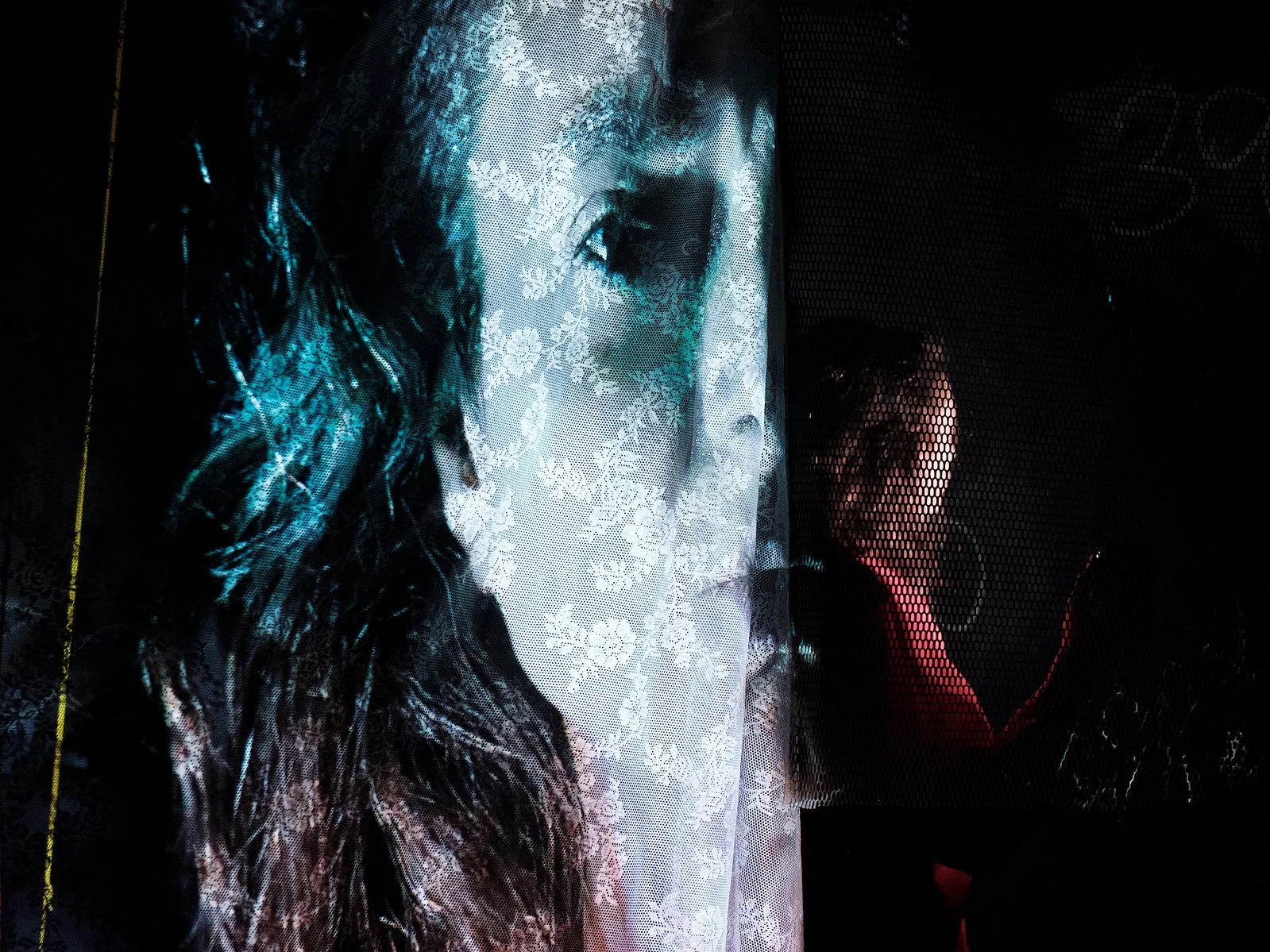
SUBJ: MEDEA
subj:medeA reimagines the Medea myth through ancient texts, contemporary testimonies and personal reflections on motherhood, exile and systemic failure. Combining fragmented mythic, political and intimate voices with chalk drawings, fabric, projection and audience response, the solo challenges Medea’s image as a monster and examines how women and mothers are blamed while the structures that fail them remain obscured. The work transforms myth into an embodied political investigation and a ritual of refusal.